Difference between Asian Rhinoplasty and Western Caucasian Rhinoplasty byDr. Philip Young: Asian Rhinoplasty is different from rhinoplasty done for a Caucasian. Caucasians usually require reductive rhinoplasty. This entails making the nose smaller or “reducing’ the size of the nose. Asian rhinoplasty is typically an augmentation type of rhinoplasty where parts of the nose are actually made bigger like the tip and nasal bridge. The Asian rhinoplasty necessitates placing grafts from rib, ear, nasal septal and foreign material like silicone, medpor, and goretex. I have a unique approach to the Asian Nose that you can read about on my website. I have a video below and you can see more on my website.
Thanks for reading, Dr Young
Dr Young specializes in Facial Cosmetic and Reconstructive Surgery and is located in Bellevue near Seattle, Washington
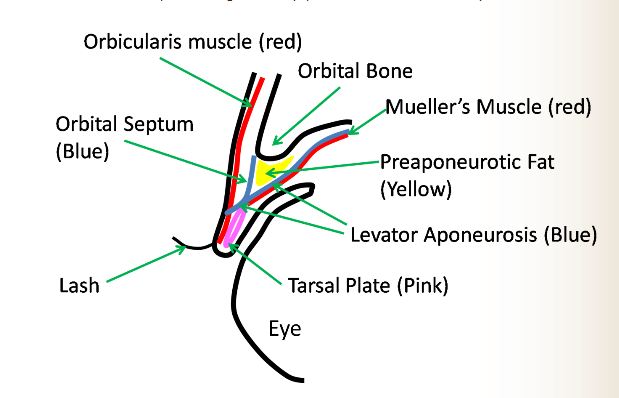
Crusting 4 months after asian eyelid crease surgery. This is my 4th revision the first couple dropped? A discussion presented by Dr. Philip Young: Crusting after Asian Double Eyelid Surgery should not last more than 1-2 weeks. If the crusting lasts more than that, you may get scarring and difficult healing. I would have your facial plastic surgeon look at this situation as soon as possible. Otherwise, you might have a bad appearance from the scarring that could occur here. The dropping of the eyelid can occur more commonly with non-incision techniques. Also the skin to levator approach is dependent on scar tissue that can last and maintain the crease in a variable way. Meaning, the crease could last and persist differently in the eyes or asymmetrically in the eyes. This is due to the fact that these crease forming procedures are based on scarring to hold the crease. I carry out the Asian Eyelid Procedure in a unique way that lasts a long time. My procedure that I do is difficult, but once mastered makes a huge difference in terms of longevity. The procedure is uniquely called the orbicularis levator fixation technique. Below is the anatomy of the upper eyelid and will help you understand this technique once you follow the links to get to that page. This technique would be great for you because if you have a tendency to drop this technique actually leaves sutures inside your eyelid to hold your crease. These sutures stay in there permanently and this assures that the crease stays put and holds for the long run.
Thanks for reading, Dr Young
Dr Young specializes in Facial Cosmetic and Reconstructive Surgery and is located in Bellevue near Seattle, Washington
My eyelid crease is too high 3 days after Asian Double Eyelid Crease Surgery? What can I do? A Case Presentation by Dr. Philip Young: Asian Eyelid Surgery: Early on the crease is much higher than will be the final result. The eyelid crease always looks much higher early on after Asian Double Eyelid Crease Formation. The swelling tends to take up the space of the skin that would normally fold over the crease. You don’t want to do anything at this early point in time. Your doctor will know best. The earliest that any Asian Eyelid Surgeon Specialist would do something would be at 2 weeks’ time. Don’t worry this will settle. You always have the option of making the crease lower if you desired or higher if you desired. There are many options.
Thanks for reading, Dr Young
Dr Young specializes in Facial Cosmetic and Reconstructive Surgery and is located in Bellevue near Seattle, Washington
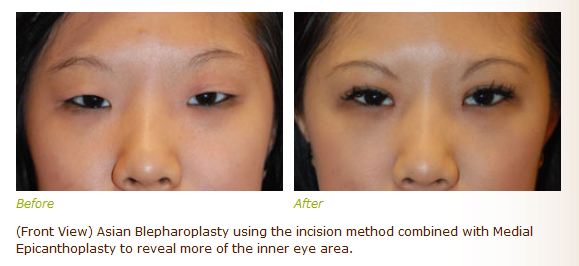
Asian Eyelid Surgery through Incision or Partial Incision Techniques. Which is the better technique? by Philip Young MD of Bellevue | Seattle:Incisional Asian Eyelid Surgery is more accurate and longer lasting than partial and no incision approaches. The incisional approach allows the surgeon to see the structures that need to be adjusted to create the crease. This, in turn, allows the surgeon to directly work with these structures instead of doing it blind through partial and no incision techniques. The incisional technique also allows the surgeon to expose the structures that need to be cleared of tissue to allow the crease to be more definitely formed. Also with partial and no incision techniques, because of the blind approach, are more likely to have discontinuous creases, loss of the crease, and asymmetric results.
Thanks for reading, Dr Young
Dr Philip Young specializes in Facial Cosmetic and Reconstructive Surgery and is located in Bellevue near Seattle, Washington
Asymmetric eyelid folds options for treatment by Dr. Philip Young of Seattle: Asymmetry is found in all of our faces. Around the eyes and periorbital region, differences are much more apparent. This is some of the reason why Revision Asian Blepharoplasty Double eyelid surgery is so difficult. There are ways to make the eyes look more symmetric. You can excise more skin. You can reset the crease at a higher or more inferior position. You can set the crease more laterally and medially to make things more symmetric. You can fat graft one or both of the eyelids or remove fat to make them more symmetric. The options and the process on how you do it can be endless and infinite.
Thanks for reading, Dr Young
Dr. Philip Young specializes in Facial Cosmetic and Reconstructive Surgery and is located in Bellevue near Seattle, Washington
Asian Double Eye Lid Surgery and Swollen Crease one year later? presented by Dr. Philip Young of Bellevue | Seattle: One year is a little lengthy after Asian Double Eyelid Crease Surgery. Ultimately, I would need to visualize your images or in person. It is possible that this swelling / induration / thickening could be from scar tissue, it could be due to the crease being set too high / too inferior, it could be due to the crease not being set deep enough and some thicker tissue that was incorporated into the crease. Sometimes the swelling is related to the thicker brow tissue being pulled over the crease. All reasons necessitate different methods of correction. You are welcome to email me pictures and I can do a phone or video consult. I have people from all over the world carry out consults with me remotely! I look forward to hearing from you. You can also read more at our Asian Cosmetic Surgery WebPage.
Thanks for reading, Dr Young
Dr. Philip Young specializes in Facial Cosmetic and Reconstructive Surgery and is located in Bellevue near Seattle, Washington
This was a question that I answered for someone that had a ptosis repair with persistent swelling for 4 months after the procedure. This is how I answered this question:
This is my opinion on what is likely going on. I think that the approach that was made to correct your ptosis repair has caused some contracture and tissue buildup to create a crease for you that you did not have before. That is why you are seeing more lid on the left side. The way to correct this would be to assess where the crease is set on the good eye. Approach the revision at the same height as what you measure on the good eye, revise the ptosis repair and then close without recreating your crease. If you do have a distinct crease on the good side, I would create the crease on the ptotic side at the same height as the good side. The issue would then be whether the current crease will have the tendency to reform. This can be prevented with some fat grafting through my techniques. Although this is my opinion, I’m pretty sure this is what has happened. You can always write me if you would like some more counsel. You can read more about this and the case below here on our Asian Eyelid Surgery Learn More Page.
If you ever want some questions answered you can always email me here.
Thanks for reading, Dr Young
Dr. Philip Young specializes in Facial Plastic and Reconstructive Surgery and is located in Bellevue near Seattle, Washington
by Bellevue | Seattle’s Dr. Philip Young | Aesthetic Facial Plastic Surgery:
This is a response to a question that I answered for a person who had a procedure by another doctor:
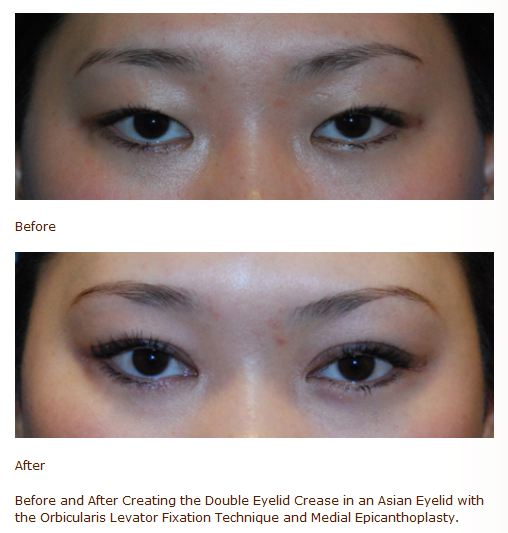
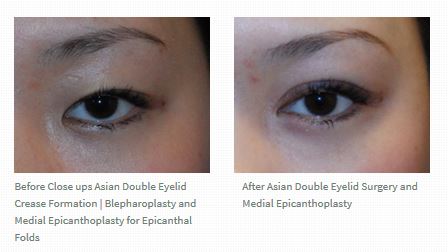
The dark purple color is actually normal after asian blepharoplasty. That occurs because of the inflammation and that brings more blood flow to that area. Also because that area is thinner than most areas on the body, it tends to show colors more that show through the skin more (because of the thin nature of skin in this area). This will get better with time. This is not a hematoma. I think the result that you have is excellent. I have seen many more issues from other surgeons that are much more significantly adverse. Your result is par for the course!! I would obviously verify this with your particular surgeon to make sure that your actual physical exam is consistent with what I see in the pictures. Ultimately, you need a surgeon to really see what is going on face to face!
asian-bleph-double-eyelid-crease-before-after
Cheers!, Dr Young
Dr Young specializes in Facial Plastic and Reconstructive Surgery and is located in Bellevue near Seattle, Washington
by Bellevue | Seattle’s Dr. Philip Young | Aesthetic Facial Plastic Surgery:
This is a response to a question that I answered for a person who had a procedure by another doctor:
Yes you can recreate your double eyelid (Asian Double Eyelid Surgery) through tissue grafting. The reason that this occured was because there was too much tissue / fat taken out of your eyelids. Basically you have to reset the crease to the new level and if it is lower you will most likely need to harvest tissue and graft in the area. For a triple fold, you need to essentially fill the area of the triple fold with tissue. I have some asian double eyelid revision videos on my website that describes this. Here is our general youtube site where you can see many different plastic surgery videos for you to learn from.
Thanks for reading, Dr Young
Dr Young specializes in Facial Plastic and Reconstructive Surgery and is located in Bellevue near Seattle, Washington
by Bellevue | Seattle’s Dr. Philip Young | Aesthetic Facial Plastic Surgery:
This is a response to a question that I answered for a person who had a procedure by another doctor:
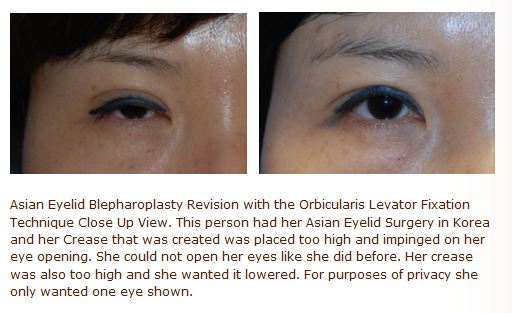
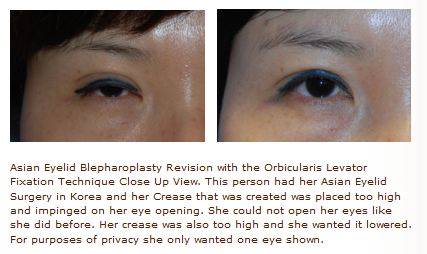
Your crease always look higher at first after asian double eyelid surgery, but I would mention this to your physician. Only he will know how the procedure was done. His experience will allow him to make that judgement. Usually the crease will go down progressively over the next weeks to months. If your surgeon felt that it was too high he could release it at the one week point and reattach to a lower point. If this were the case 6 month later than I would be a little more concerned. There are ways to make the crease go down. The limiting factor is the amount of skin taken during the original procedure. If there is a lot of skin taken then it will present a more difficult scenario in terms of making the crease go to a lower point.
asian-double-eyelid-crease-before-after-left-eye
Thanks for reading, Dr Young
Dr Young specializes in Facial Plastic and Reconstructive Surgery and is located in Bellevue near Seattle, Washington