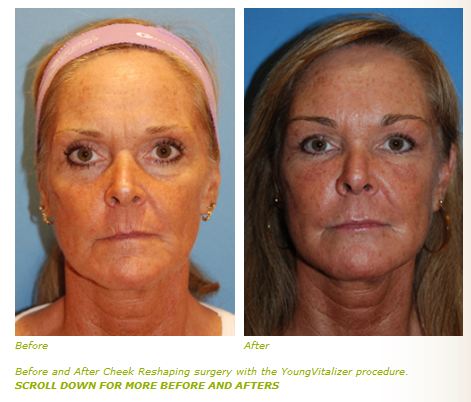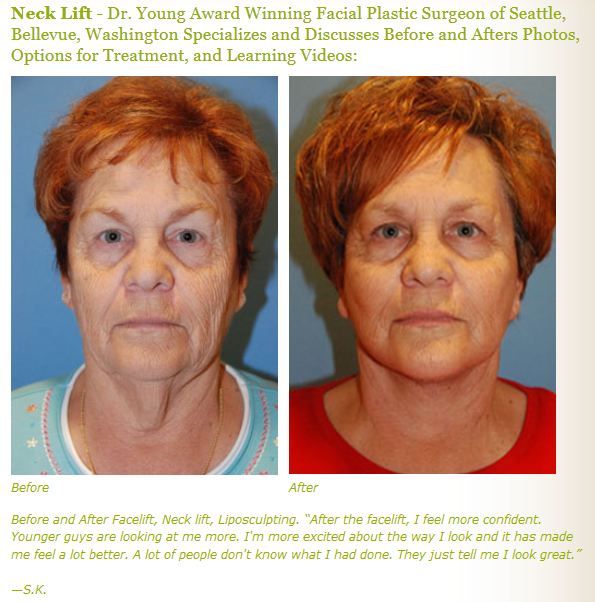
Archive for the ‘Facelift / Face Lift / S lift / Mini Lift / Weekend Face Lift / Quick Lift / Image Lift’ Category

Plastic Surgery Face lift Alternative, Older Philosophies, and Newer Alternatives

Friday, February 25th, 2011

Plastic Surgery in the past has concentrated on the philosophy of reductive surgery. In the past, Plastic Surgeons typically approached facial plastic and reconstructive surgery by reducing and excising away tissue. The results often lead to a tighter and unwanted look. These results have made people who have received plastic surgery in the past look like they had something done. The question is why that occurs.

As you age, the process is really dominated by a volume loss in your face (And your whole body for that matter). You lose volume all throughout the face. But what it appears to others though is that your face is dropping or sagging. How does this occur? Well, as you lose volume, the skin and tissues are no longer pushed forward away from the facial skeleton. Without this volume support the tissue, the only way for the tissues to move is down and inferiorly, therefore the sagging. So, in the past, plastic surgeons would see this drooping and would try to correct by lifting and cutting away tissue. This is also compounded by the fact that plastic surgeons were surgeons. What we mean is tht surgeons have been trained all of these years on the art of cutting and surgical procedures. Naturally over time, they had a predisposition to cutting things away. This is the genesis of the reduction philosophy in plastic surgery.

Why is this approach unatural? There is an easier way to answer this question and we have a great analogy. Your aging is analogous to a grape and it’s change to a raisin over time.  This process of change entails a lot of volume changes. The grape is the volumized version of the raisin. Plastic surgery has traditionally approached facial rejuvenation by making this raisin into a smaller more pulled raisin. They made incisions in the raisin’s wrinkles (from being dried up) and then excised the skin of the grape to make things tighter. As you can start to see, the raisin that has gone through this approach can never really look like the grape it once was without some type of addition to the volume of the raisin.

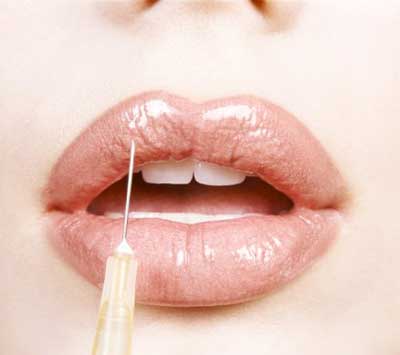
We are advancing in our understanding of facial rejuvenation and the above ideas are central to this change in thought. Volumizing is playing a major role in this improvement of our approaches.  It began with fillers in the 1990′s and possibly earlier.  The nasolabial folds were the first areas to be volumized in this spirit.  Collagen started the trend where restylane now dominates. This technique then began to be applied to other areas of the face such as the marionette lines (lines inferior to the corner of the mouth), lower eyelid hollows and bags, and the rest of the face. Because of the temporary results that were achieved from restylane (6 months to a year at best), other options began to surface and resurface.  Long acting injectable fillers include radiesse (a natural bone product made up of calcium hydroxyapatite), artefill (methylmethacrylate microspheres), sculptra (poly-L lactic acid).  Most of the results obtained by the longer acting fillers were like restylane but had the potential to last much longer.  What has been found through experience, though, is that the longer acting injectables eventually do lose volume over the course of a year but the actual materials can persist for longer.  How do we make sense of this? Part of the reason why is due to the carrier molecule that becomes absorbed (glycerin, carboxy methocellulose, etc).  With this absorption, the results also wane. Silicone has been used as injectable filler, but the results are variable from good to disastrous.

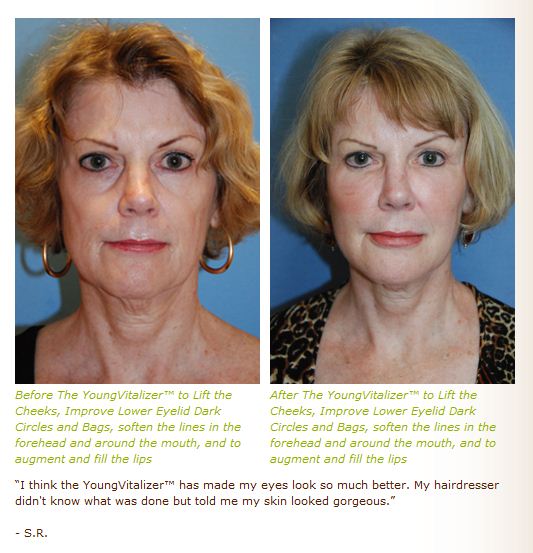
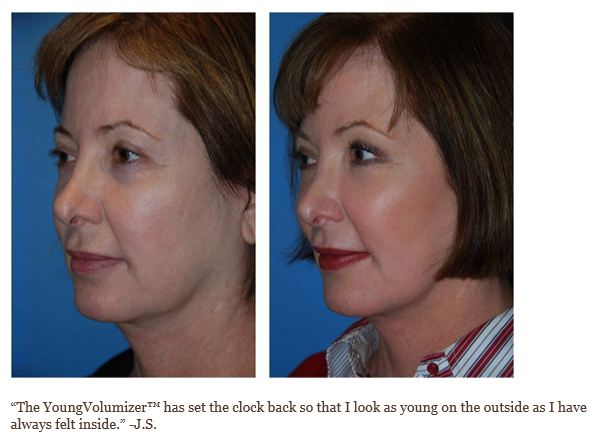
As I mentioned, other options began to resurface with this new interest in volumizing.  This new idea for more natural results, fat injections began to make a comeback.  The process includes harvesting fat from another part of your body (abodomen most commonly but also hips, waist, side of the legs) and then it is refined and injected into various parts of the face.  The results from fat grafting in the face can be amazing.  The main issue with fat grafting is finding the most optimal technique to achieve the most reliable fat survival results.  Consistency has been a major challenge for plastic surgeons. There are many steps that are taken with fat grafting that can play a role on the fat’s survival.  It has been difficult to study every aspect of this process.  But research is continuing. The plastic surgery community is doing all that it can to find the best alternatives including fat grafting and volumizing the face. In terms of fat grafting, there are many ways to approach this complicated endeavour.  Just as many different artists will draw a face in an infinite amount of varying ways, so too can a plastic surgeon volumize a face in a those infinitesimal ways . The Young Volumizer is an amazing approach to volumizing the face.

Other alternatives to volumizing the face is the use of facial implants.  Facial implants are most commonly placed in the chin, and cheeks.  Implants for the rest of the face have been used but with less frequency.  Implants, however, require a significant surgical procedure to place them in the face which many people are not excited about. This is one of the reasons that fat grafting has taken such a big part of the stage in natural facial rejuvenation through volumizing.

Thanks for reading, Dr Young

Dr Young specializes in Facial Cosmetic and Reconstructive Surgery and is located in Bellevue near Seattle, Washington

Reoccuring jowls and neck laxity after a facelift will likely need revision

Tuesday, January 18th, 2011

Reoccuring jowls and neck laxity after a face / neck lift likely will need some type of revision.  Liposuction could handle some of these issues, if these issues are related to excessive fatty tissue. The concern with just employing liposuction is the layering of the skin.  With the reduction of fat, the skin will be of relative excess and may or may not redrape the way you would like it to.  Also often the reoccurance is not due to loosening, it is often due to the loss of swelling from the process that was acting to pull back the neck and jowls.  I know that there are certain things that you really need to do for the neck to be properly shaped and formed.  You need to remove all the necessary fat that has accumulated and also you really have to treat the neck thoroughly to pull it tight.  You need to do a corset neck lift and this needs to be done with an attention to detail.

Hope this was interesting

If you ever want some questions answered you can always email me here.

Thanks for reading, Dr Young

Dr Young specializes in Facial Plastic and Reconstructive Surgery and is located in Bellevue near Seattle, Washington

Earlobes should not be pulling down with your cheek with a facelift

Tuesday, January 18th, 2011

Earlobes should not be pulling down with your cheek with a facelift. This is a common error with facelifts.  You need to avoid taking out too much skin after pulling up the muscle layer in a facelift.   This condition will lead to a pixie ear deformity where the earlobes are stretched down.   It is common knowledge among the facial plastic surgery community to avoid tension on the skin when closing a facelift incision.  Scarring and pulling of the ear are common sequelae when there is significant tension on the skin.  Don’t worry though there are ways to correct this.  There are many options to reversing this condition.  I had a male patient recently that just had that problem from another surgeon. We were able to correct this with some minimally invasive approaches.

Hope this was interesting

If you ever want some questions answered you can always email me here.

Thanks for reading, Dr Young

Dr Young specializes in Facial Plastic and Reconstructive Surgery and is located in Bellevue near Seattle, Washington

Radiesse would be one option for filling up pleating defects from a facelift.

Tuesday, January 18th, 2011

Radiesse would be one option for filling up pleating defects from a facelift. The other option includes carrying out a revision of the facelift to better drape the facial skin. This results from more pulling on the skin and is less likely to occur with more deeper plane lifts that pull up the muscle instead of skin.  Instead of Radiesse, fat injections are a great option to consider for pleating skin.

Hope this was interesting

If you ever want some questions answered you can always email me here.

Thanks for reading, Dr Young

Dr Young specializes in Facial Plastic and Reconstructive Surgery and is located in Bellevue near Seattle, Washington

lumps and bumps 11 days after neck liposuction, is there anything more that I can do?

Wednesday, December 29th, 2010

This is a question that I answered for a patient that liposuction done by another surgeon. She was followed by one of the nurses who told her to stop wearing the wrap 11 days after the procedure and that there was nothing to do about the lumps.  She wanted a second opinion.  this is how I answered her question:

Wearing a wrap after the neck lift can be very beneficial. Lumps and bumps are usually par for the course and sometimes unavoidable. They could be areas where there was a previous blood or fluid collection, a suture, retained fat deposit, etc.  I suggest to my patients wearing the wrap non stop for 7 days, and then at night for a total of 2 months.  Where there are areas of swelling, lumps and bumps I suggest them placing some extra gauze there under the wrap for more pressure. This often can resolve some extra swelling.  If this continues there are other measures that can be taken to help the situation, ie steroid injections, more liposuction, removal of the suture, etc.

Thanks for reading, Dr Young

Dr Young specializes in Facial Plastic and Reconstructive Surgery and is located in Bellevue near Seattle, Washington

Dr Young talks about Pixie Ear Deformity Correction (Seattle, Washington)

Friday, July 30th, 2010

A pixie ear deformity is when the earlobe gets pulled down inferiorly so that it becomes elongated.  It often occurs after a facelift procedure when there is too much skin taken and not enough fixation of the muscle to hold up the lift.  Some people are naturally like this.  There are several ways to improve this situation.  Oftentime it entails elevating the earlobe so that it is not as pulled down.  But it can entail closing the area below the new earlobe where the used to be.  Sometimes you can avoid this closure area by relifting the face and pulling the earlobe back by moving the skin backwards.

You don’t necessarily have to correct the other ear if you are satisfied with the way it looks.  But many things can be done to change the appearance of your ears if so desired.  These are all questions that you can ask your particular physician when you go into your consult.  I try to answer as many questions as my clients can think of during the consultation. I also offer my email for them to write me more questions if they have any given that people usually start wondering about more things after they leave.  I also check my email multiple times in a day so I can be attentive as possible to their questions and concerns.

Thanks for reading, Dr Young

Dr Young specializes in Facial Plastic and Reconstructive Surgery and is located in Bellevue near Seattle, Washington

I have acne scars and was wondering if a minilift could help. I also have hollow under eye areas, and cheek hollowing. Is fat grafting a good option for my lower eyes and cheeks?

Thursday, May 6th, 2010

A minilift (Dr Young has extensive experience in facelifts and has done over 1200 facelifts and is located in Bellevue, WA) could help remove some extra skin and Fat injections are great for the Hollows under  the Eyes.  I have many patients that I have done a minilift for acne scars.  My patients seem very pleased with the results for this reason. It is not a common application for a minilift to improve acne scars but some people find it very useful.  Fat injectons under the eyes are a great way to improve the volume loss there and the dark circles, and baggy look in this area.  Fillers can also be done here as a temporary measure.  Fat injections, if all variables are positive, can last years in this area.  Volumizing in this area is the most natural and, in my opinion, is better than any type of lower eyelid lift or cheek lift.  Fat injections are also great for acne.  A thin layer under a bed of acne scars will improve their appearance, rejuvenate the skin and elevate some depressed scars to a degree.  I think volumizing your whole cheek could really help your appearance.

Thanks for reading, Dr Young

Dr Young specializes in Facial Plastic and Reconstructive Surgery and is located in Bellevue near Seattle, Washington

I had 2 facelifts and my surgeon is suggesting fat grafting to my face for facial rejuvenation.

Tuesday, April 20th, 2010

Fat is a great option after multiple facelifts (Dr Phil Young Seattle / Bellevue Washington) to volumize the face.  Aging can be seen as a process of changing from a grape to a raisin for lack of a better descriptive scenario.  Facelifts essentially make the raisin into a smaller raisin. When in fact to look younger a lot of times looking like a fuller younger naturally looking grape is the better option.  This is where volumizing plays an important role.  Fat injections volumize the face to return the raisin to the grape that it used to be.   Given that you have had 2 facelifts, you likely have a reduced skin volume and hence you will be smaller than the grape you once were, unless you gained alot of weight during the years.  Volumizing would be excellent for you likely.  But it all depends on what you look like and this is a general comment.  At the age of 74, you can still get benefits from facial fat grafting.  I have done a lot of patients over this age. It all depends on your health.  Of course you need enough fat to do the procedure and your surgeon can tell you about that or assess this situation. Here is a youtube video showing fat injections into the cheek (Dr Young fat injections to the cheek)

Thanks for reading, Dr Young

Dr Young specializes in Facial Plastic and Reconstructive Surgery and is located in Bellevue near Seattle, Washington

What facelifts last the longest? If after 5-10 years do you look the same as you did as if you had nothing done?

Thursday, April 8th, 2010

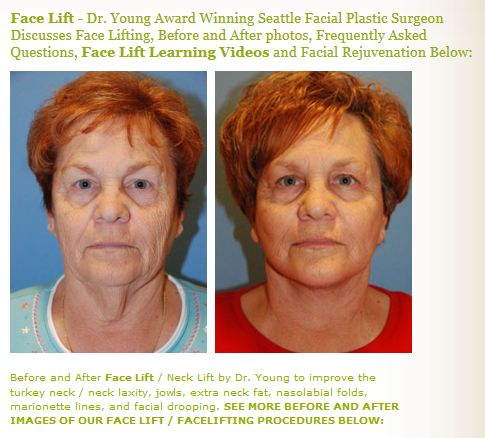
Deep plane facelift (Dr Young has done over 1200 facelifts) results last the longest of all the facelifts. This type of facelift depends on pulling the muscles of the face rather than the skin. There are many scientific articles that show that the muscle layer is less likely to stretch as opposed to skin. There are also numerous clinical studies in patients that support this finding. I have done over 1200 facelifts and know the difference between the different types of facelifts and have found that the deep plane facelifts last longer, much longer. To answer your question, you should always look better than a twin sister that didn’t have the facelift no matter how many years later.

Thanks for reading, Dr Young

Dr Young specializes in Facial Plastic and Reconstructive Surgery and is located in Bellevue near Seattle, Washington

Is a facelift the best option for acne scarring? What other options do I have?

Wednesday, March 3rd, 2010

Facelift is not the first option but I have noticed improvement in Acne Scarring (Philip Young MD, Seattle / Bellevue Washington) from this procedure.  I personally have many patients that have noticed a significant improvement on their acne scarring  from a facelift procedure.  Is the facelift a procedure that is usually recommended to a person to improve their acne scars? The answer is “no”.  But I usually present all options to the patient.  Among these options include laser resurfacing, chemical peels, dermabrasion, dermasanding, fillers, fat injections, and excisional techniques.  It depends on how your scars look like.  If you have alot of deep ice pick scars you may need some excisions to completely remove them.  Of course if they are everywhere you might have to pick and choose which ones to excise or cut out.  This excisional approach is usually followed by some resurfacing.  I usually prefer to excise and then resurface the areas at the earliest 6-8 weeks.  One important point to remember is that the goal is improvement.  Your skin is probably not going to ever look like your skin when you were a baby of course. But we can make it better!  Fat injections and fillers can be used to break up the scarring that sometimes holding the skin down to the deeper layers.  This often causes the scars to be held down.  Fat injections is the best way to soften up the adhesions of scarring to allow the skin to come away from the deeper scarring. Here is a live demonstration of fat injections being done in the face (Dr Young is a fat injections specialist from Seattle, Washington). Fillers can also do this, but less well.  Here is a live demonstration video of an Acne Treatment Procedure.

I hope that helps.

Thanks for reading,

Dr Young

Dr Youngspecializes in Facial Cosmetic and Reconstructive Surgery and is located in Bellevue near Seattle, Washington