Botox Learning Blog: My first couple of experiences with giving people botox and realistic expectations

January 27th, 2012

So we’re training with Dr. Young and the Restylane, Medicis Representative and their nurse injector. One of the things I learned is to emphasize realistic expectations. Some people come in to our office with very deep etched in wrinkles in between the eyes. Many people come in with the idea that these wrinkles will go away completely. Realistic expectations are important to emphasize at this point. Botox / dysport will not make them go away completely, but they can improve them. Some static wrinkles, or wrinkles  that are present even without movement, do not go away with botox / dysport.  They can be improved over time with continual use of botox and dysport. But most of the time the static wrinkles are less improved as compared to dynamic wrinkles – the wrinkles that are accentuated with facial movements. Static wrinkles can be improved over a long period of time with continual use through the constant action of the cells that are in the skin. Fibroblasts are constantly remodeling the skin and when the skin is relieved from the constant action of the facial muscles, they are able to efface or reduce some of the severity of static wrinkles. But this takes time. The other alternative is to use fillers to help with the wrinkle reduction that could reduce the wrinkle production even more.

Thanks for reading

M.C. one of the Nurse Injectors in our office!

Our team at Aesthetic Facial Plastic Surgery!

Acne Scar Treatment Healing Diary Released by Dr. Young Seattle

January 25th, 2012

So we are excited to release our new photo diary on the healing process and recovery after subcision and deep chemical peeling for Acne Scar Treatment (Here is a link to see this Acne Subcision Chemical Peel Healing Diary). Many of our clients wonder what the healing process is like. We wanted to show the healing process through photos and what to look for in terms of healing and how to clean etc.  Deep chemical peeling is much like the process of laser resurfacing and the recovery and cleaning / healing process. So we invite you to also visit our laser resurfacing page to find out other tips to get the best healing from chemical peeling and laser resurfacing.

Subcision is the process of elevating the tissue under the skin and scarred areas, to allow the depressed scars to elevate to the more normal unscarred skin. This is the first step in making the scars look better. The depression in acne scars can cast a shadow in this area, the darkness clues people on the status that the particular area is not like the rest (ie it looks like a scar).  After the scar is more elevated then you can proceed to polish the skin level to get it to look more like normal skin. The polishing step is when we decide to do laser resurfacing and dermasanding. Dermasanding is the process of dermabrasion with medical grade sterilized sandpaper.  This is a more accurate way of doing dermabrasion in Dr. Young’s opinion. It also avoids spreading infection to the people around.

Thanks for reading

Our team at Aesthetic Facial Plastic Surgery!

Aging and delaying the inevitable

January 17th, 2012

The skin is an amazing organ.  It protects us from microbes and the elements, helps regulate our body temperature, and permits the sensations of touch, heat, and cold.  Human skin is compromised of the epidermis, the dermis and the underlying adipose layer.  In the dermis, collagen fibers work to give strength and structure to the skin, while elastin fibers allow the skin to stretch and return to its original shape.  It is well established that sun exposure breaks down those fibers and is responsible for premature aging as well as skin cancer.  The most common signs of aging are:

  • Sagging and loss of elasticity
  • Enlargement of pores
  • Dryness and dehydration
  • Hyperpigmentation
  • Telangiectasia

Sunscreen is, above all, the most important aspect of your skincare regimen.  We’ve all heard it so many times by our primary care physicians, dermatologist and plastic surgeons.  They’re not lying!  A broad-spectrum sunscreen must be applied every morning to prevent future damage.  Choose one that has zinc and titanium dioxide to ensure adequate UVA and UVB protection.  Topical antioxidants are also an amazing addition to your anti-aging skincare routine and will help everyone at any age.  In addition to a great preventative skincare routine, monthly microdermabrasion treatments or light chemical peels are great to assist in the penetration of active topicals.  If you have any questions or concerns regarding which products or treatments are best for you, feel free to call us anytime.

Plastic Surgeon: Questions from a potential medical student interested in becoming a doctor and plastic surgeon.

January 12th, 2012

This is what someone wrote me with questions regarding becoming a doctor. We thought it would be interesting for some of our readers:

1. What made you choose this profession? I lost my mother to cancer which initiated my decision to become a doctor. It was too depressing to do cancer work for me so I decided to do something more light hearted with facial plastic surgery.


2.What is the best thing/experience of a doctor? Making people happy.


3. What is the worst? We always do the best we can. Medicine is a complicated profession. Although we use the best technology and latest and proven techniques, sometimes, although not common, people aren’t happy. You can’t make everyone happy as hard as you try. I’m not sure if any person, business, or corporation can make everyone happy.  You just have to keep trying your best, hope for the best and try to turn everything into a positive in some way.


4.How long does it take to become a basic doctor? 4 years undergrad, 4 years medical school, 5 years head and neck surgery residency, 1 year fellowship in facial plastics. At a minimum, you need around 11 years after high school. I took 16 years after high school to complete all my training.


5. Is physics needed in becoming a doctor? Yes, it is part of the biology degree I needed for premed.


6. What is the average percentage throughout grade 11 and 12 you need in high school to become a doctor? You probably need at least a 3.5 gpa to get into a college. But I wouldn’t give up if you don’t.  This will allow you to get into a college. Then in college, I would think you need at least a 3.5 to get into medical school.  But really it will make it easier if you have a gpa that is above a 3.6. I had a gpa of 3.61 in high school. And then in college I had a 3.72 but my premedical classes gpa was higher in college. But in medical school, I was one of the top 2 students for the first couple of years of medical school which earned me the Mcgraw Hill Award. I was also alpha omega alpha honor society in medical school which is awarded to the top 5–10% of the students in your class. In head and neck residency at USC, my yearly exams were always in the 90-95th percentile. During my fellowship board exam I scored the number one score in the country on the written exam.


7. What is the starting salary? Hard to say. Starting around 90,000 I would think for a primary care doctor. But it goes up later. Surgeons start around 150k at least.


8. Could ones salary raise depending on the number of patients? Of course. One’s salary is often times based on your production. This is what you will find in any sector.


9. How do i begin a career as a doctor as above. Do well in high school, then in college, then in medical school. I would consult with your school’s administration. I would research it on the internet as much as possible. I would call undergrad colleges, medical schools. There are resources out there for people like you.


10. What is the estimated tuition/ financial expense in becoming a doctor? Undergrad around 20-40 thousand. Medical School can be much more. My tuition in medical school was around 40k for each year for everything. You get paid in residency a small amount like 24k a year.


Thank you for your time.

Seattle Facial Plastic Surgeon Releases New Webpage specialized for the Seattle Area

January 10th, 2012

In an ongoing effort to continually improve our patient’s experience, we are constantly updating our website with informative information. We recently started specific topics on certain areas of the face and certain procedures. One example of this is the issue on facial swelling after a facelift. This page is our start of trying to help the many people out there that might be having swelling after a facelift. We advocate the options of steroids injections or oral administration and we discuss the times and situations when you use either or neither. We discuss using a wrap to help you with your swelling in certain defined areas that are having this issue. Also we discuss the use of tape to help with the fine tuning of how you heal. Revisional surgery is always considered. Re doing the liposuction, carrying further tightening, are just some of the options that we can consider.

In addition to the above, we are also specifically addressing the different topics on facial plastic surgery for the Seattle area through additional pages found under our Seattle Facial Plastic Surgeon home page. We are updating these pages with before and afters, frequently asked questions, helpful links to help you understand the procedure, and also the links to the specific areas of concern as we just touched on in the topic on swelling after a face lift. More of these topics will be added to help face lift patients and patients from other facial plastic surgery procedures around the world.

Please contact us if you have a specific question or would like additional topics added to our website with this link. Plastic Surgery Contact.

Thanks for reading

Our team at Aesthetic Facial Plastic Surgery!

Healthy skin is beautiful skin

January 6th, 2012

As the body’s largest organ, the skin is the biggest sign of inner health.  The same poor lifestyle choices we make on a daily basis can damage the strength and health of our skin.  Smoking, consumption of too many carbonated or alcoholic beverages, sleep deprivation can decrease the amount of blood, oxygen and nutrients that your skin needs to stay beautiful.  The result can be premature wrinkling, dull and unbalanced skin. And who wants that? Vitamins play a huge role in reversing that affect.   Here are some basic Vitamins found in most products today.  The amount will vary per product line and the higher concentrations will always be found in clinical-strength products sold at higher retailers or your physician’s office.

  • Vitamin A minimizes the appearance of fine lines and wrinkles
  • Vitamin B3 stimulates the metabolism in the skin
  • Vitamin B5 acts as a humectant while promoting healthy cell regeneration
  • Vitamin C naturally lightens, brightens and tightens the skin
  • Vitamin E works as an antioxidant and helps protect the lipids in the body, including cell membranes from oxidation.
  • Vitamin K can minimize the appearance of broken capillaries

If you have questions regarding your current products, please feel free to call our office anytime.

Happy New Year and hope you have a year of clean, balanced and beautiful skin!

Best, Tanya

Seattle Face Lift Webpage Released

December 31st, 2011

We recently updated our page on face lift from our Seattle / Bellevue based office. There are some helpful links to our procedures including face lifts, eye lifts, fat injections, brow lifts, and the YoungVolumizer, the breakthrough incision less face lift. What is the best thing for you. Dr. Young’s ideas are based on results, natural results and constantly improving the way we do things in facial rejuvenation. It started with his theory on facial beauty called the Circles of Prominence. During his training in Los Angeles, he noticed that some of the results from facial plastic surgery were not natural. Facelifts look pulled and stretched. Eyelifts were leading to people looking different from how they used to look when they were younger. This instilled Dr. Young to find out why. He discovered that much of what was out there describing what was beautiful in the face was relatively sparse. Even today’s plastic surgery textbooks, and other book on beauty still use theories from the 1400′s to describe beauty. Those theories are largely based on Leonardo da Vinci’s theories on beauty that are now referred to as the neo classical canons. They are founded on Roman theories and hence are termed “neo”.  These theories however are based on external landmarks that we just don’t spend that much time looking at when we see and analyze a face.  A new theory must be based on what we spend most of our time looking at. Dr. Young discovered, not surprisingly, that there was something in the eyes that was important for a new theory to be correct.  You can read more about Dr. Young’s theory on facial beauty here.

So what procedure should you choose. Well, if you want to look more like what you looked like when you were younger volumizing will play some role no matter what. The question is whether you changed your appearance over time. If you changed from your facial structure from a grape to a larger grape, you may have extra tissue that will need to be removed. This is where a face lift, neck lift and liposuction can help with.  But if you didn’t change much and just lost volume as you aged, then volumizing might be the main way for you to rejuvenate your face. Dr. Young has a way of determining what is best for you through his theory. Within the middle part of the face, Dr. Young believes that mid face lifts, and lower eyelid lifts are rarely the best option / choice. Volumizing is almost always the best way to rejuvenate this area. The one area that volumizing is the weaker choice is for the jowls, and neck laxity. The double chin, and neck banding are better treated with a neck lift and volumizing will not help much. For the eyes, if you don’t mind a more scultped look then an eyelift might be the better choice for you for you upper eyelids. Also if you didn’t like your eyebrows at the position that they were when you were younger, then volumizing might not be the best choice here and browlifting might be better. Just remember that a browlift will change the way you look but it can improve your eyebrow position.  But don’t do a browlift to return to a younger age and the way you looked when you were younger.

Dr. Young has a nice video on Introducing his Breakthrough Incision Less Face Lift, the YoungVolumizer.

You can visit his new page on Face Lift here (Seattle Face Lift) as well.

Thanks for reading

Our team at Aesthetic Facial Plastic Surgery!

When is the best time for laser treatments?

December 27th, 2011

Getting your laser treatments such as; IPL and Laser Hair Removal are great to get done in the winter months.  Why?  That is when you are less likely to get sun exposure and you generally tend to be on the paler side.  This will allow the laser to pick up the pigment better on sun spots or the hair follicle, giving you the best results possible.  During the summer months you want to protect and maintain your results with antioxidants, a good broad spectrum sunscreen and let’s not forget…enjoy your new beautiful skin!

Seattle Acne Scar Treatment Webpage Released

December 26th, 2011

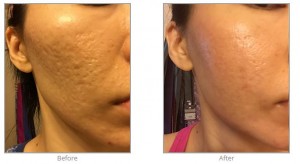
We have made a new webpage on Seattle Acne Scar Treatment  on our website www.drphilipyoung.com. We added some new pictures / photos and some links to help people understand a little more about how we are treating scars that were created by Acne. We would also like to explain a little about our thought process when it comes to treating Acne Scars.

Acne is a process that can affect all layers of the skin. The process originates from the hair follicle. The hair follicle depending on the point of the growth cycle that it is in will have a certain length that it goes in the skin. At times, the hair follicle will be very deep and sometimes less deep. The point is that when acne erupts, the process can extend deep into the skin and affect all the layers even the area deep to the skin. When scars form from Acne, they also affect all the layers of the skin. So the scarring is really pervasive. That makes treating acne difficult as well. When it comes to excisions, acne scarred skin is less pliable and it doesn’t stretch as much. This makes for a more difficult time with healing. Better results are harder to achieve. So you want to heal your skin. We believe that you have to prep the skin before you actually do other things like excisions, subcisions, punch grafting, flap reconstructions, and deep chemical peeling.  We have a 3-4 step process that we like to do for people. It entails 1. tissue grafting, 2. more invasive work such as excisions, subcisions, deep chemical peeling, punch grafting, flap reconstructions, 3. More refinement, 4. co2 laser resurfacing and dermasanding. Our goals are to heal the skin first, treat the skin with more invasive procedures to get the scarred skin to the same level, repeating the second step until the goals are reached, then refining our results with a polishing technique that entails co2 laser resurfacing and dermasanding.

You can go through our webpages with this in mind to better understand what we are aiming to do.

Thanks for reading

Our team at Aesthetic Facial Plastic Surgery!

Choosing a Plastic Surgeon is the most important step

December 16th, 2011

There is no denying the fact that there are hundreds of Plastic Surgeons to choose from when you are beginning to think of any kind of enhancement surgery. We always tell patients to pick the best surgeon for you and your individual needs. It is very important to meet with these doctors face-to-face and understand their abilities to help you achieve your desired look.

We often have patients asking about Dr. Young’s background and experience. Here are some Q&A’s that we have compiled to allow our new patients to learn more about Dr. Young as a surgeon, as a person and his office and team.

1. He has extensive experience – As a leading Bellevue / Seattle facial rejuvenation expert, Dr. Young has performed more than 1200 facelifts, including liposuction, neck and eye lifts. He has performed more facelifts than over 99% of surgeons in the northwest.

2. Academic Excellence – Dr. Young strives to continually learn the latest techniques and gain the most up-to-date knowledge. His thirst for knowledge was demonstrated on the written exam administered by the American Board of Facial Plastic and Reconstructive Surgery , which he scored the number one score in the nation compared with his colleagues who specialize in plastic surgery of the face and neck.

3. State-of-the art facility – Dr. Young uses the most advanced lasers and techniques available and continually updates his office and procedural rooms to better treat his patients. Dr. Young’s CO2 laser and Intense Pulse Light equipment are the industry’s gold standard. He continually researches the literature to find the most current and best practices for the particular conditions that he is treating. We are also AAAHC certified which signifies that we have satisfied some of the most rigorous standards for an office with a surgical facility. See our AAAHC Plastic Surgery Page and our certification letter.

4. He has been internationally acclaimed for his understanding of facial beauty – Understanding what makes a face beautiful is essential in developing the goals that plastic surgeons strive for when they help their clients. Dr. Young noticed that many results that were seen in Hollywood stars were less than optimal. He thought that if the best were achieving these results something needed improvement. He spent several years studying the reasons for this which ultimately culminated in a groundbreaking theory on facial beauty called the Circles of Prominence. This internationally acclaimed theory received the Sir Harold Delf Gillies award for his ground-breaking theory on beauty awarded by his peers from the American Academy of Facial Plastic and Reconstructive Surgery

5. He is triple-board certified – Board certification is a rigorous process that physicians undergo to ensure that they meet the qualifications and standards of competency that will allow them to safely and successfully practice the area of medicine in which they are specializing. Dr. Young is triple board certified by three separate institutions: the American Board of Facial Plastic and Reconstructive Surgery, the American Board of Otolaryngology Head and Neck Surgery, and the American Board of Laser Surgery.

6. Dr. Young is born and raised in Washington – Dr. Young has an affinity for treating and helping Washingtonians because he was born and raised in Federal Way, Washington. He also graduated from University of Washington. He has always wanted to return to Washington, which he thinks is the best place on earth to live and work.

7. He believes in “Anything and Everything” for his patients – Dr. Young believes that beyond all of his training and accolades, his clients and patients are what matter the most. At the end of the day, he wants to know that he has done something good in the world and that he has made someone happy. He strives for the best customer experience and believes in the adage of “Anything and Everything” for his patients.

8. He has an excellent, caring team – Dr. Young demands the very best in his staff to help care for his patients. His staff includes a registered nurse who has extensive experience in cardiac (heart) care and is Advanced Cardiac Life Support certified. He has staff that are extensively trained in AAAHC certification and medical office management as well as a person who has a law degree. Most importantly, each and every one of his staff have the utmost concern to take care of the people that come to us and he has chosen carefully those people that have that commitment.

9. Dr. Young is Fellowship Trained – In addition to training, during his residency, at the University of Southern California, Dr. Young went on to do an extra year of training under world renowned Dr. Frederick Stucker at Louisiana State University in Shreveport, Louisiana. Dr. Stucker is one of the Grandmasters in Facial Plastic and Reconstructive Surgery and is one of the founders of the Face to Face humanitarian program. Dr. Young travels around the world donating his time, expertise, and care towards this cause and has been to Vietnam and China.

10. Dr. Young devotes his time to Humanitarian efforts both locally and internationally – Dr. Young donates his time locally and around the world to help victims of trauma / domestic violence and those who have been born with congenital anomalies such as cleft lip and palate. He has recently been featured in several local newspapers (Bellevue Reporter, Northwest Asian Weekly, UW Daily) for his humanitarian work on a local domestic violence victim. Check out those stories on our website.