Archive for the ‘Facial Implants’ Category

Seattle | Bellevue Nasolabial Folds Treatment by Dr Philip Young: Options and New Ways of Approaching this Area

Sunday, March 10th, 2013

Treating the nasolabial folds seems like a very specific issue and separate from all the rest of the face. This approach has been used in the past. We did face lifts to pull the fold up. Implants to the Nasolabial Fold: we used tissue to fill in the crease with fascia, alloderm, implants of silicone, goretex etc.  We have used Midface lifts to pull the cheek upwards to help this area. Fillers have been commonly used to approach this fold with a minimally invasive thought. Facial Implants have been used to fill in the space under the fold with some success. All of these approaches seem to work to some degree, with fillers have a more temporary duration and Solid Implants having more of a longer lasting effect. Perhaps the better way of looking into the nasolabial folds is to address them from a global perspective and approach them as being a part of the general advancement of aging of the face as a whole.

The nasolabial folds as an indication of the face aging as a whole: The aging of the face can be thought of as a general loss of volume sort of like how a grape changes into a raisin. The grape is much larger than a raisin and has a lot less folding than a raisin does. Filling in the nasolabial folds is like filling in a small area of depression or crevice in a raisin. The raisin may look good but may not look completely regenerated like a grape would look. It is our opinion and the opinion of the YoungVitalizer Team that to more appropriately address the nasolabial folds, you need to address the whole face, or at least the larger area around the nasolabial folds to get the best result. We feel to better address the nasolabial folds you need to shape the whole part of the face around the folds. This means that you should rejuvenate the cheek, the mouth, the nose and the general area around the nasolabial folds.  You can read more about the YoungVitalizer by clicking the logo of the YoungVitalizer below. Also here is link that discusses nasolabial folds and how to treat them:

http://youngvitalizer.com/About_files/WebHeaderLogo_TextOnly_v2.png


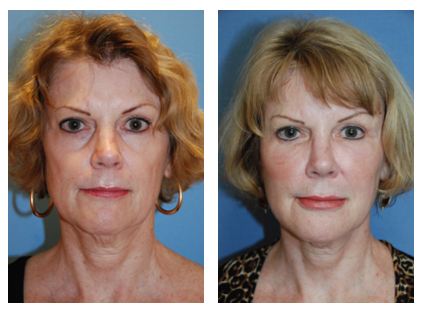
Here is a before and after of the YoungVitalizer.

Feeling good on the outside

Wednesday, November 30th, 2011

flowers for plastic surgeryWe all try to live a healthy life. Whether that be through our food and exercise, we also need to take care of our skin and face. There are many damaging obstacles that our face comes in contact with. Sunlight, pollution and our own natural aging process.

Thanks to advances in technology and medical treatments, repairing damaged skin and reversing the noticeable signs of aging has become easier, faster and less painful – and can often be done without surgery. Quite literally, it’s possible to have a treatment today and be back at work tomorrow.

Many aesthetic treatments have proven highly effective in repairing and rejuvenating the skin, including:

  • Botox injections ease wrinkles in the upper third of the face. Effects typically last for 3 to 6 months.
  • Chemical peel removes fine lines and smoothes the skin, especially around the eyes and mouth.
  • New filler injections are used for lip augmentation and to treat wrinkles and skin folds. Effects typically last up to a year.
  •  Laser resurfacing treats sun-damaged skin, scarring, and other facial skin problems. It also works well on stretch marks, especially when treated early.
  • Microdermabrasion erases ultra-fine lines, rejuvenates the complexion, and helps restore healthy skin tone and color.

It is also very important to be on some kind of skin care regimen, including sunscreen of 30SPF. Making a few changes to your daily routine can pay off in healthier, more youthful looking skin. Daily doses of vitamin E (200-400 IU) and vitamin C (500-1000 mg) as both have been shown to stimulate collagen production. Adults aged 40 and above should add a daily calcium supplement of 600-1000 mg. Multi-vitamins containing Evening Primrose oil and green tea extract can also benefit the skin.

Many skin care products now contain vitamins and antioxidants. Products with vitamin C can help against fine lines and wrinkles, stabilize collagen and help sunburned skin. Vitamin C also works to lighten darker skin pigment by decreasing melanin. Vitamin A can also help fight wrinkles and brown spots, a common problem after pregnancy for Asian women.

Before choosing your skin care products, it’s important to know your skin type. Those with dry skin should add moisturizer every day, while oily skin needs regular cleansing, with moisturizer applied only sparingly. Those with sensitive skin should avoid perfumed products and herbal extracts, as these can irritate the skin. If you’re unsure about your skintype, feel free to schedule a complimentary consultation with our Aesthetician Tanya.

The YoungVitalizer can be a substitute for many traditional procedures like a face lift, mid face lift / cheek lift, lip augmentation, eye lift, etc

Sunday, November 13th, 2011

Why is that? Well a big part of the aging process is a volume loss and if you had a way to replace the volume in the face, doing so in special areas can make you look incredibly younger. It is our secret on how to do this. But there are ways to volumize the eyes, forehead, temple, lower eyes, cheeks and mouth area to substitute and replace face lifts, mid face lifts / cheek lifts, upper eyelifts, lower eyelifts, cheek implants, jaw implants, chin implants, brow lifts, temple lifts, etc with the YoungVitalizer.  That is why we call the YoungVitalizer, the Breakthrough Incision Less Face Lift. The idea of cutting away tissue is becoming an older idea. Cutting away changes the face.  The only situation that cutting away tissue can come into play is if your face changed dramatically since when you were younger.  Aging is like a grape changing into a raisin.  Traditional procedures tended to make that raisin into a smaller raisin. This action and process would make the raisin contorted. Because now you are trying to shape the raisin into a smaller volume. Some of the skin of the raisin will just not conform to the smaller volume you now have because you lost it from the transformation from a grape to a raisin. Replacing this volume will play a huge part in making the raisin back into the grape again.  See this introduction video to the YoungVitalizer.

Thanks for reading,

Dr Young

#plasticsurgery #facelift #plasticsurgeon #medispa #skincare

volume changes in aging is taking more prominence in our thinking about facial aging

Saturday, February 26th, 2011

This is a new report which I thought was interesting. It discusses more of the idea that volume is the likely playing more of role in facial aging and not drooping.  This is more evidence that the future of facial plastic and reconstructive surgery and facial rejuvenation surgery lies in volume replacement instead of tissue reduction / excision.  Here is an interesting article in Plastic Surgery News on this subject. Below is a before and after of our incision less face lift alternative called the YoungVitalizer.

incision less face lift young vitalizer before after pic

Thanks for reading, Dr Young

Dr Young specializes in Facial Cosmetic and Reconstructive Surgery and is located in Bellevue near Seattle, Washington

Plastic Surgery Face lift Alternative, Older Philosophies, and Newer Alternatives

Friday, February 25th, 2011

Plastic Surgery in the past has concentrated on the philosophy of reductive surgery. In the past, Plastic Surgeons typically approached facial plastic and reconstructive surgery by reducing and excising away tissue. The results often lead to a tighter and unwanted look. These results have made people who have received plastic surgery in the past look like they had something done. The question is why that occurs.

As you age, the process is really dominated by a volume loss in your face (And your whole body for that matter). You lose volume all throughout the face. But what it appears to others though is that your face is dropping or sagging. How does this occur? Well, as you lose volume, the skin and tissues are no longer pushed forward away from the facial skeleton. Without this volume support the tissue, the only way for the tissues to move is down and inferiorly, therefore the sagging. So, in the past, plastic surgeons would see this drooping and would try to correct by lifting and cutting away tissue. This is also compounded by the fact that plastic surgeons were surgeons. What we mean is tht surgeons have been trained all of these years on the art of cutting and surgical procedures. Naturally over time, they had a predisposition to cutting things away. This is the genesis of the reduction philosophy in plastic surgery. See our Introduction video on the YoungVolumizer now called the YoungVitalizer.
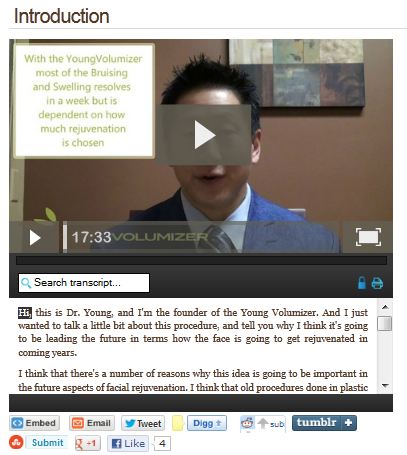
young vitalizer introduction video

Why is this approach unatural? There is an easier way to answer this question and we have a great analogy. Your aging is analogous to a grape and it’s change to a raisin over time.  This process of change entails a lot of volume changes. The grape is the volumized version of the raisin. Plastic surgery has traditionally approached facial rejuvenation by making this raisin into a smaller more pulled raisin. They made incisions in the raisin’s wrinkles (from being dried up) and then excised the skin of the grape to make things tighter. As you can start to see, the raisin that has gone through this approach can never really look like the grape it once was without some type of addition to the volume of the raisin.

We are advancing in our understanding of facial rejuvenation and the above ideas are central to this change in thought. Volumizing is playing a major role in this improvement of our approaches.  It began with fillers in the 1990′s and possibly earlier.  The nasolabial folds were the first areas to be volumized in this spirit.  Collagen started the trend where restylane now dominates. This technique then began to be applied to other areas of the face such as the marionette lines (lines inferior to the corner of the mouth), lower eyelid hollows and bags, and the rest of the face. Because of the temporary results that were achieved from restylane (6 months to a year at best), other options began to surface and resurface.  Long acting injectable fillers include radiesse (a natural bone product made up of calcium hydroxyapatite), artefill (methylmethacrylate microspheres), sculptra (poly-L lactic acid).  Most of the results obtained by the longer acting fillers were like restylane but had the potential to last much longer.  What has been found through experience, though, is that the longer acting injectables eventually do lose volume over the course of a year but the actual materials can persist for longer.  How do we make sense of this? Part of the reason why is due to the carrier molecule that becomes absorbed (glycerin, carboxy methocellulose, etc).  With this absorption, the results also wane. Silicone has been used as injectable filler, but the results are variable from good to disastrous.

As I mentioned, other options began to resurface with this new interest in volumizing.  This new idea for more natural results, fat injections began to make a comeback.  The process includes harvesting fat from another part of your body (abodomen most commonly but also hips, waist, side of the legs) and then it is refined and injected into various parts of the face.  The results from fat grafting in the face can be amazing.  The main issue with fat grafting is finding the most optimal technique to achieve the most reliable fat survival results.  Consistency has been a major challenge for plastic surgeons. There are many steps that are taken with fat grafting that can play a role on the fat’s survival.  It has been difficult to study every aspect of this process.  But research is continuing. The plastic surgery community is doing all that it can to find the best alternatives including fat grafting and volumizing the face. In terms of fat grafting, there are many ways to approach this complicated endeavour.  Just as many different artists will draw a face in an infinite amount of varying ways, so too can a plastic surgeon volumize a face in a those infinitesimal ways . The Young Vitalizer is an amazing approach to volumizing the face.

Other alternatives to volumizing the face is the use of facial implants.  Facial implants are most commonly placed in the chin, and cheeks.  Implants for the rest of the face have been used but with less frequency.  Implants, however, require a significant surgical procedure to place them in the face which many people are not excited about. This is one of the reasons that fat grafting has taken such a big part of the stage in natural facial rejuvenation through volumizing.

Thanks for reading, Dr Young

Dr Young specializes in Facial Cosmetic and Reconstructive Surgery and is located in Bellevue near Seattle, Washington
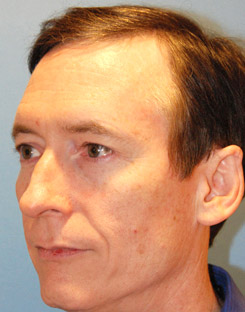
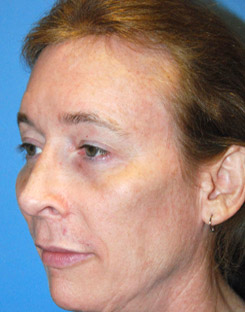
When is the earliest time you can take out cheek implants if you don’t like them

Wednesday, December 29th, 2010

This is a question that a person was asking regarding taking out implants less than a month after they were put in.  These implants were placed by another surgeon.

There is really no period when you should wait or that is generally recommended or considered standard after a cheek implant.  What your surgeon is likely wanting you to do is to reassess your results.  The swelling should go down and you may like the results later.  That is probably the intent of your surgeons. So most doctors are going to want you to really make sure you want them out with the ultimate results that are going to become manifest for you. I think patience is important.  But you do have options.  There is no reason you can’t remove them asap.  I think the other doctors just want you to wait to really assess your results. You are always welcome to reach out to me for more advice or more questions. You can email us here: Aesthetic Facial Plastic Surgery Contact.

cheek implant before after pictures

Thanks for reading, Dr Young

Dr Young specializes in Facial Plastic and Reconstructive Surgery and is located in Bellevue near Seattle, Washington

I had a sliding genioplasty 5 days ago and I look acromegalic or cave manish

Wednesday, December 15th, 2010

This is a question that I answered for a patient that had a surgery done a while ago by another surgeon:

5 days is too early to judge your results after genioplasty. Right now you are going to have a tremendous amount of swelling.  You have to wait at least a week and up to a month for it to really look good.  Generally, I tell people that you will have 60% of your healing at 6 weeks, 80% at 6 months and the rest occurs up to 2 years later.  So be patient. It will get better and most of the time things can be changed back to the way they were or altered a bit.  I personally prefer chin augmentation to genioplasty.  Chin augmentation is generally, through many studies, associated with less complications than genioplasty.  These complications can include, nerve damage, a step off deformity, bone loss, problems with the implants or titanium plates and screws used for the fixation of the chin implant or the genioplasty segment that is advanced.

Cheers!, Dr Young

Dr Young specializes in Facial Plastic and Reconstructive Surgery and is located in Bellevue near Seattle, Washington

Chin Implant Revision for misplacement and for aesthetic reasons (when the implant is too large)

Friday, June 18th, 2010

There are many times when I get people that come to my office wondering about changing the appearance of a chin implant that they had before.  I have this case of a woman who had a chin implant by another surgeon and she felt that the chin implant was riding too high. She felt that the chin implant was also too large and it made her look a little masculine.  When it comes to revisions, you should not ever just take an implant out unless it is a really small implant.  What happens is that the soft tissue can ball up and contract and create an unfavorable appearance.  What is typically the better thing to do is to replace the large implant with a smaller one.  If the implant is already smaller, then you could make a case to not put any implant in and this is an option only for a small implant.  Generally small implants are the ones that people have an issue with.  Also when you put an implant in, they implant should alwaws ride on the inferior border of the mandible where the bone is hard and less likely to undergo resorption.  I prefer medpor implants for many reasons.  They can get incorporated and vascularized to act like your own tissue much more so than silicone implants.  Silicone implants tend to have a capsule form around it and will not get incorporated. Hence, when you hit your silicone implant there is more likely the chance for complications years after the procedure as opposed to medpor where once it gets incoporated past 12 weeks, it will be more resistant to infection and rejection. Here is a video showing and demonstrating what we are talking about.

Thanks for reading, Dr Young

Dr Young specializes in Facial Plastic and Reconstructive Surgery and is located in Bellevue near Seattle, Washington

What is a good option for something in place of Sculptra? What are the alternatives?

Wednesday, January 6th, 2010

Fat injections are the best option as an alternative to Sculptra injections. I even consider fat injections first before Sculptra. Nothing is better than using your own tissues for plastic surgery purposes.  You have essentially no risk for reactions, no risk for cancer, no toxicity from your own tissues. Sculptra is made up of suture material. It is a foreign substance that is essentially broken down into carbon dioxide and glucose and ultimately carbon dioxide and water.  Other ways of filling is through silicone implants. The problem areas for implants and Sculptra is the periorbital area.  Implants are also hard to use for the buccal area where there is no bone for the implant to rest on.  It is here that Sculptra can be used and Fat injections.

Thanks for reading, Dr Young

Dr Young specializes in Facial Cosmetic and Reconstructive Surgery and is located in Bellevue near Seattle, Washington

Can you Fat Graft / Transfer Around a Facial Implant? Can you Fat Graft / Transfer / Inject into the area if you remove the Implant?

Wednesday, December 30th, 2009

You can graft around an implant but it depends on the blood supply around the implant.  Typically, around the implant a layer of scar tissue usually forms. Scar tissue is notoriously known for its low blood supply.  Bringing fat next to the implant has the potential to live if done right.  Over time with the survival of fat around the implant, additional fat grafting (or Fat transfer / Fat Injections / Fat Transplants / Fat augmentation / Fat enhancements) can be done there to further increase the volume around the implant. If you remove the implant, the success of fat grafting can be attained but within the scar tissue, the fat has a more difficult time to survive.  This may mean that you will need to do more touch ups to the area.  Fat grafting can lead to long term results.  It is all about the technique.  In my practice, fat does survive and sometimes near 90% of the fat can survive.  This is true, so much so, that I need to be careful not to put too much fat in to certain areas.  It is easier to put more fat into the area than to take it out. Here are some results of fat grafting:

Hope that helps!

Thanks for reading, Dr Young

Dr Young specializes in Facial Cosmetic and Reconstructive Surgery and is located in Bellevue near Seattle, Washington

Before Fat Grafting / Transfer / Injections to the Forehead, Temple, Upper / Lower Eyes, Cheeks, Nasolabial Folds, Marionette Lines, and Mouth Area

Before Fat Grafting / Transfer / Injections to the Forehead, Temple, Upper / Lower Eyes, Cheeks, Nasolabial Folds, Marionette Lines, and Mouth Area

After Fat Grafting / Transfer / Injections to the Forehead, Temple, Upper / Lower Eyes, Cheeks, Nasolabial Folds, Marionette Lines, and Mouth Area
  • After Fat Grafting / Transfer / Injections to the Forehead, Temple, Upper / Lower Eyes, Cheeks, Nasolabial Folds, Marionette Lines, and Mouth Area