Archive for the ‘Necklift / Neck Lift / Platysmaplasty / Turkey Gobblers / Neck Bands’ Category

I had a face and neck lift a year ago and it hasn’t turned out the way I envisioned it would be. Is there another form of a neck lift?

Monday, March 1st, 2010

There are many different ways to do Neck lifts and facelifts (Dr Young Bellevue, near Seattle Washington). It really depends on how your surgeon did your lift.  There are a lot of shortcuts out there and if you didn’t have a really extensive neck lift you are likely going to have some recurrence.  I have done over 1200 face and neck lifts and I know that to really address the neck you need to do direct work there.  I prefer to do a corset platysmaplasty.  You can go and read about this in more detail in my other blogs.  But you really have to tighten the neck under the chin area in order to treat the laxity in the neck skin and muscles.  Also, manytimes, it is necessary to go under the neck muscles (platysma) in order to treat the fat underneath and also the muscles under the chin may need some resecting to really improve the area more.  Current face and neck lifts that are marketed out there just take too many shortcuts to tighten the neck. Although they take less long to do, they just don’t address the neck sufficiently.  You can send a picture to me and I can take a look at your neck and what you are worried about.

I hope that helps.

Thanks for reading, Dr Young

Dr Young specializes in Facial Cosmetic and Reconstructive Surgery and is located in Bellevue near Seattle, Washington

Why are my face and neck lifts different?

Saturday, February 13th, 2010

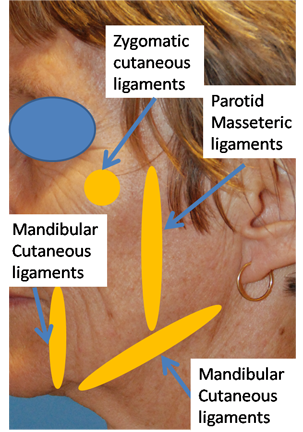
First. I have a lot of experience doing facelifts (Shows Dr Young’s Actual Patients).  I’ve done over 1200 and I’ve done almost every imaginable approach to facelifting.  What I’ve learned is that there are several ways to do this procedure and it really depends on the person and what he or she wants.  I do think that minilifts are not long lasting but could be good for the person who doesn’t want a big difference in the face and neck.  As I mentioned in another blog where I show the difference between the many variations of face and neck lifts, the minilift really just pulls up on the facial muscles with sutures. So you are depending a lot on the sutures and subsequent scarring that will hold the lift up.  This works for some people but not everybody. I think this lift works best in a patient that has lost a lot of weight and has a lot of skin and loose structures.  Also, I find that older patients typically haven loosen their anatomy enough to respond to a minilift more than other types of faces. I find that people that have a little bigger face tend to have stronger tissues that resist the minilift’s forces of pulling with just the sutures.  Younger patients also have tighter tissue that respond less to a minilift. If in doubt I think that more traditional approaches get way better release of the structures.  The reason for this is that there are many retaining ligaments in the face, see the picture below.  The zygomatic cutaneous ligaments are tough fibers that hold the cheek to the bone inferior and lateral to the eye.  The parotid masseteric ligaments hold the tissue in front of the parotid to the skin with a long row of fibers from the zygomatic arch to the jawline.  The mandibular ligaments hold the skin to the jawline.  All of the ligaments prevent the skin from going upward when you do a facelift and if you don’t break them up properly they resist most facelifting attempts and forces.  When you do a minilift, there are many times when you do lift the skin up far enough to break up these parotid and zygomatic ligaments.  And even if you do, the sutures that you use to pick up the tissues anterior to those ligaments are loose enough to come up and require a lot of force.  This is why many minilifts are more painful in actuality than traditional full facelifts.  In my experience doing more than 1200 facelifts I have definitely found that to be the case.  Most of the time, you really need to do traditional maneuvers to break up those ligaments and this is usually done through working under the facial muscles or the SMAS.  Also, knowing how to extend these sub SMAS facelifts over the smiling muscles is a vital technique that most surgeons don’t know how to do.  When these zygomatic ligaments are released you can lift up the middle part of the face, the area above the mouth folds (nasolabial folds), much easier.  When the parotid masseteric ligaments are properly released you can pull up the jowls and folds around the mouth much easier as well.  This more complicated facelift is typically called variations of the deep plane lift, composite lift and zygo-orbicularis lift.

One thing to realize is that not all neck lifts are done equally. Take it from me.  I have done hundreds of minilifts with mini neck lifts and there are more definitive ways to pull up the neck (Dr Young’s Neck Lift, Bellevue Office).  There are many shortcuts that you can do that help but really don’t make a huge difference.  When I do a neck lift, I remove all of the fatty tissue in the neck by actually cauterizing it away.  On top of this, I also take the fat away underneath the chin in a deeper plane.  All of this takes time, and shortcuts don’t get to these areas and you are always left with neck laxity and loose skin and fat in the neck.  There are also other techniques I do to address the deeper muscles underneath the chin that most surgeons do not know how to do.  I have learned over doing so many neck lifts, that cutting the Platysma is not as beneficial as leaving it intact.  When you leave it intact you are able to tighten the neck better and I do a corset type of sewing to really tighten up all the neck muscles for a tighter neck.  This takes a lot of experience to do.

Thanks for reading, Dr Young

Dr Young specializes in Facial Cosmetic and Reconstructive Surgery and is located in Bellevue near Seattle, Washington

Retaining Ligaments

Can the area under the chin in the neck be made to look good even without the help of a chin implant?

Monday, December 7th, 2009

A chin implant and augmentation can improve the lax tissue under the chin by pulling up the tissues that are causing the sagging double chin.  It can improve the neck lift even more than when a neck lift is done alone.  A neck lift (Platysmaplasty, Neck Rejuvenation, Lower Face lift, Necklift, submentoplasty, double chin surgery, turkey gobbler surgery, neck enhancement) done well though can significantly tighten the neck.  The key is how the platysma muscle is treated.  This muscle is essential to how the neck looks.  When doing a neck lift, the platysma must be tightened from just under the chin to the bottom of the neck area.  This changes the structures of the neck for a better shape.  There are also other adjunctive techniques that can be done to the fat, tissues and the muscle under the chin which can also improve the way the neck looks.  Another very important key to tightening the neck is by making sure that the skin of the neck has a place to go.  Elevating the skin to a certain degree is essential to allow the skin to shift to a more shapely appearance.  All of this takes experience and knowledge on the part of the surgeon.

Thanks for reading, Dr Young

Thanks for reading, Dr Young

Dr Young specializes in Facial Cosmetic and Reconstructive Surgery and is located in Bellevue near Seattle, Washington

What is best a neck lift and submentoplasty? Which is best to use for neck laxity.

Thursday, October 15th, 2009

They both can mean the same thing. So you should talk to your doctor and ask him to tell you specifically what he means when he used each of those terms.   A submentoplasty doesn’t have a definite meaning specifically assigned to it.   Since it is part of the neck, I consider it a neck lift or a type of neck lift (or submentoplasty / necklift / platysmaplasty).  Sometimes, surgeons differentiate a submentoplasty as a procedure which is limited to an incision under the chin.  This could be applied to someone that doesn’t have a lot of laxity and someone who has minimal improvement to achieve (or turkey gobbler / neck laxity / neck banding / platysma bands / double chin / turkey waddle / fat neck).  Under this condition, you could limit most of your procedure to the incision just under the chin.  This does make things more difficult for the surgeon however.  Manytimes to make the skin adhere tightly to the new structure created under the chin, you really need to dissect the neck planes and tissue all the back to the hairline and down further.  This is always needed but the more significant the laxity the more you need to dissect posteriorly to allow the skin to redrape.  When you need to dissect more posteriorly, an incision behind the ear becomes more and more necessary.  When you start making incisions behind the ear, it is wise to consider tightening up the neck muscles in this part of the procedure and this is the portion that most people start calling it a neck lift. Personally, I like employing both approaches to ensure that the neck is a contoured as possible.

Thanks for reading, Dr Young

Dr Young specializes in Facial Cosmetic and Reconstructive Surgery and is located in Bellevue near Seattle, Washington

Turkey neck treatment in a person that is afraid of her history of keloids!

Thursday, September 3rd, 2009

Keloids occur less in the facial area and certain ethnicities are more prone. It really depends on where you develop keloids.  Areas of high movement such as the knees, and shoulders are more likely to develop keloids.  The high part of the chest is another area that has a predilection for keloid production.  If you developed keloid in these prone areas the chances are that you develop keloids to the facial area are probably a lot less.  You are caucasian based on the pictures which leads me to believe that you are probably less likely to develop keloids in your face and neck area.  But you may be a rare case and more details about your keloid formation would help someone decide.  The options for improving your turkey neck include liposuction which will give you some mild to moderate improvement.  A formal neck lift (or necklift / platysmaplasty / lower face lift ) can entail only small incisions under your chin and behind your ear and hide very well and really improve your turkey neck (or submental fat, double chin / neck laxiy / neck bands / fatty neck).  Others have used lasers to tighten up the skin to a minimal degree.  But if you really want some results, I would do a more formal procedure and it can make a world of difference!

Thanks for reading, Dr Y

Dr Young specializes in Facial Cosmetic and Reconstructive Surgery and is located in Bellevue near Seattle, Washington

What is laser neck lift?

Wednesday, September 2nd, 2009

A laser neck lift can mean a form of liposuction that has a laser attached to it that helps shrink the fat and which can lead to more tightening of the skin.  Fair results can be achieved with this technique.  It can also mean using resurfacing techniques with co2 technology that can cause tightening by creating collagen contracture in the more superficial layers of the skin.  The tightening from this can lead to even less neck tightening than the laser liposuction.  Lumenis has technology that can tighten the deeper layers of the skin through their Deep fx hand piece that directs the co2 laser to the deeper layers.  Again this is more subtle in terms of the results.  If you really want tightening of the your neck bands, turkey gobblers, double chin, loose neck skin a formal neck lift (neck lift / platysmaplasty / lower face lift / lower facelift) is the best way to do that.  This can be done with small incisions under the chin and behind the ear which can heal almost imperceptibly.

Dr Young specializes in Facial Cosmetic and Reconstructive Surgery and is located in Bellevue near Seattle, Washington

Non surgical option for jowls and neck lift?

Thursday, July 16th, 2009

The neck and jowls are harder to treat without some type of surgery but there are options. There are many different lasers (Active Fx/ Deep Fx) out there that are tightening skin without large incisions. These, I think, are still in the experimental phase but some really believe in this mode of non surgical face and neck lift. The results are usually subtle.  And require more than one treatment for better results. A traditional neck lift is the best way to pull up the jowls and neck laxity.  Other options include fat injections in the face to volumize the face to pull the jowls and some of the neck laxity away.  Fat injections in the face can do wonders to make one look younger and are a great option to avoid long incisions that you are worried about.

I refined an amazing volumizing procedure called “the YoungLift”.  This is an innovative technique that volumizes your face to bring out the younger and natural you without looking like you had something done.  This is not a facelift and requires no incisions.  Only pinpoint puncture sites are used and these heal imperceptibly.  The YoungLift can be done without general anesthesia and without drains, and large bandages.  You also have a lot less downtime and discomfort compared with traditional facelift procedures.  I employ the very best techniques from around the world into one volumizing procedure and he uses his internationally acclaimed understanding of facial beauty to create the youthful volume you once had. The YoungLift techniques can help with filling up the lips as well.  You can great results with fat injections in the lips.

Dr Young is located in Bellevue near Seattle, Washington

Fat injections in the neck?

Wednesday, July 15th, 2009

Fat grafting in the neck can work if done right.  The key would be to have a result where the fat survives after being transferred into the neck.  Once the fat survives past a year, it should stay in the area that it was implanted for many years.  Some surgeons have been able to maintain augmentation from fat from 10-15 years.  Lumpiness can be a problem but if the surgeon respects how to place the fat this becomes less of an issue.  When I graft fat into the face and neck, whenever I’m superficial I always use finer cannulas to transfer the fat.  I also lay the fat down as evenly as possible so that each fat transfer aliquot is placed as close as possible to the ones placed next to it.  When the fat is injected into the deeper layers, you have more flexibility and less margin for error when you use larger cannulas that deliver larger fat parcels.  Fat injections in the neck may not be perfect but one can strive to perfect this.  There may not be a better way to volumize the neck.  Ultimately, I think surgeons and scientists are going to figure out how to make fat survive better and this will be the main way that surgeons will volumize the face.

I refined an amazing volumizing procedure called “the YoungLift”.  This is an innovative technique that volumizes your face to bring out the younger and natural you without looking like you had something done.  This is not a facelift and requires no incisions.  Only pinpoint puncture sites are used and these heal imperceptibly.  The YoungLift can be done without general anesthesia and without drains, and large bandages.  You also have a lot less downtime and discomfort compared with traditional facelift procedures.  I employ the very best techniques from around the world into one volumizing procedure and he uses his internationally acclaimed understanding of facial beauty to create the youthful volume you once had. The YoungLift techniques can help with filling up the lips as well.  You can great results with fat injections in the lips.

Dr Young is located in Bellevue near Seattle, Washington

What to do about extra skin after losing a lot of weight

Friday, July 10th, 2009

A facelift is the best way to get rid of the extra skin in your face. I’ve done many facelifts on people who have gone through weight loss surgery and they work super on people who have extra skin from losing weight.  You should be able to get a super result.  Other options include the non ablative lasers and machines that tighten the skin.  Deep fx is another way of using a fractionated laser to help tighten the loose skin but these are subtle results. A facelift and neck lift are the best ways to improve this.  A facelift pulls up the muscle around your face and the neck lift goes through an incision under your chin to tighten the neck muscles. Together they can really shape your neck after weight loss.

Dr Young is located in Bellevue near Seattle, Washington

When should I have the anchor sutures taken out after a facelift and chin lift?

Friday, July 10th, 2009

It really depends on the doctor after your facelift and chin implant. I would go by what he is used and find works for him.  I usually take out anchor sutures one month later.  Not every doctor has anchor sutures placed and will just have you come back 7 days later approximately to have the sutures removed.  Anchor sutures are placed to help with the healing and are usually few in number. Basically, the longer you have the sutures in the greater the chance for scarring and train tracking.  Train tracking is essentially the appearance of train tracks due to the sutures leaving marks where they were.

Dr Young is located in Bellevue near Seattle, Washington