Archive for the ‘Laser Resurfacing’ Category

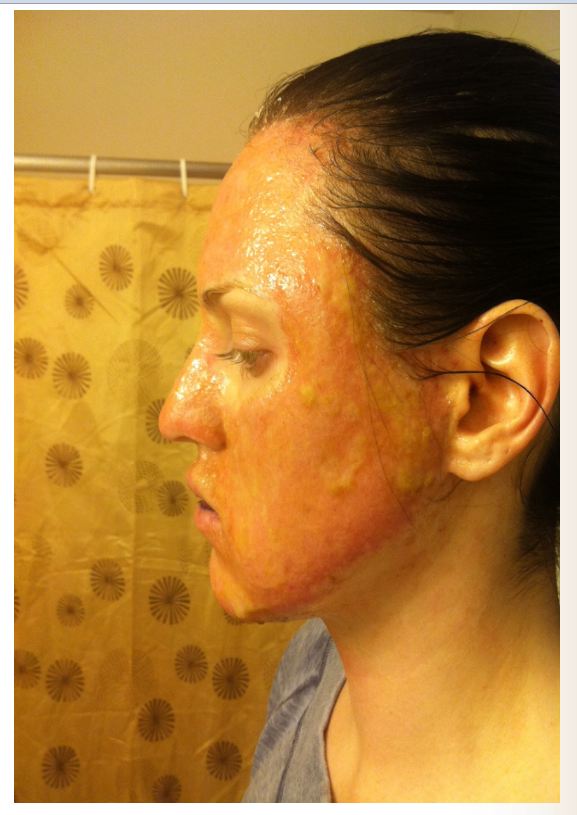
Areas of redness and scratches should heal after Active FX and co2 laser resurfacing. But Scarring should be determined by your doctor.

Tuesday, July 13th, 2010

This is a question that I answered for someone that was worried about red streaks on there face about a week after their procedure.  They wanted to know if these were areas that were possible likely places to scar.  This is how I answered her question:

Areas of redness and scratches should heal after Active FX and co2 laser resurfacing. This could be scratches that you did while you were sleeping but could also be from the laser resurfacing itself.  I would continue your current cleaning regime.  Six days after your procedure you should still be healing and with fractional co2 resurfacing, your skin should be totally healed over.  If it were more traditional resurfacing your skin could still be healing over.  The areas that are red will take some time to resolve.  As some of the other authors have suggested sunscreen and sun avoidance are crucial during the first month and up to 6 months after the procedure.  The redness will take some time to resolve but not as long if you had the traditional resurfacing.  Some suggest steroids after your skin has healed over, but this could affect the healing and collagen production and most people would suggest against it.  Intense Pulse Light or the v beam, or any laser that concentrates light in the 585nm range, your doctor should be able to determine what is best, can help with some of this redness by attacking the vessels that are causing the redness.  Otherwise the healing will just take some time.  One thing that could be important to determine is if there is significant swelling, redness and tenderness that could indicate scarring.  This is something that your doctor should determine and in this situation, a high dose topical steroid could be needed to stem possible scarring.

Thanks for reading, Dr Young

Dr Young specializes in Facial Plastic and Reconstructive Surgery and is located in Bellevue near Seattle, Washington

Mole Removal by Excision or Laser Removal

Friday, June 18th, 2010

I have many people that come to me to inquire about mole removal.  There are many ways to do this. The most common ways are to excise (cut them out) or use the co2 laser to vaporize them. Which do you choose? That is a great question that many people ask me all the time. Both have some positives and negatives. With excision, you have to incise around and take out the mole.  With this approach you can take a margin of tissue and you can go deep enough so you know that it will not come back as readily.  You also have a little faster healing and less need to care for the wound.  The healing is a little more predictable.  The drawback with excision is that you need to take more tissue to make sure the closure is flat.  This usually requires a wedge of tissue that needs to be taken out.  This can make the excision and resulting scar a lot larger than the mole itself.  Also you need sutures and you need to take them out 6-7 days later.  With the co2 laser you can vaporize the mole and just a little around it.  You avoid the larger excision of tissue, or the need to take out more than just the mole. You avoid an incision and sutures.  But the area of that is vaporized will need to heal over and this can take up to a week or more with the wound being raw and oozing a bit.  You also need to care for the area that is vaporized with cleaning 2-4 times a day and constantly have vaseline over the area vaporized.  Also with the vaporization you have more of a potential for less of pigmentation that can be permanent.  Although if this happens you can always have the area excised to remove the pigmentation and this would be like what you would need if you were to excise it in the first place.  But you don’t always have hypopigmentation and thus could have everything work out perfectly with the co2 laser.  I think recurrence of the mole is more common with the co2 laser than when you excise it out. Here are some videos to explain this during a live demonstration.

Thanks for reading, Dr Young

Dr Young specializes in Facial Plastic and Reconstructive Surgery and is located in Bellevue near Seattle, Washington

Can chemical peels lead to cold sores?

Tuesday, April 20th, 2010

A chemical peel (Dr Young of Bellevue Washington) can cause a reactivation of the herpes virus that leads to cold sores.  Some 90% of people are infected or have been infected by the Herpes Virus simplex 1 that cause oral herpes.  Chemical peels, resurfacing, dermabrasion all stimulate the skin that can reactivate the virus that usually resides in the sensory nerves (dorsal ganglion).  These peels or procedures stimulate the nerves, decrease barriers and active the virus to come down the nerves to the cause the cold sores.  They don’t actually lead to a new infection, they just reactivate the virus that has been there since childhood.  Usually if the peel is more than superficial, I will prescribe acyclovir, or vacyclovir as prophylaxis. I don’t always do that for superficial peels like glycolic, low strenght tricholoracetic acid, or jessner peels, etc.  Laser resurfacing, dermabrasion, and medium to deep depth chemical peels usually require prophylaxis.

Thanks for reading, Dr Young

Dr Young specializes in Facial Plastic and Reconstructive Surgery and is located in Bellevue near Seattle, Washington

Can lasers improve the turkey neck?

Monday, April 19th, 2010

Lasers can improve the Turkey Neck but to a minimal degree.  This is a good option for people that are not ready for surgery.  The laser can tighten the skin, improve the wrinkles and decrease the aging that occurs with sun damage.  One thing to consider that it is better to be safe than sorry in the neck.  The neck skin is thinner and has more potential for scarring and other healing issues.  So being conservative is vital in the neck area.  But to definitely treat the neck a traditional neck lift is the proven way to rejuvenate the neck.  Another option is fat injections and the YoungVolumizer for the neck. After all, a big part of aging in the neck area is a loss of volume under the skin. Here is a live demonstration of my use of a co2 laser and laser resurfacing.

Thanks for reading, Dr Young

Dr Young specializes in Facial Plastic and Reconstructive Surgery and is located in Bellevue near Seattle, Washington

Do non surgical cosmetic treatments really work?

Thursday, April 8th, 2010

Options for non surgical cosmetic treatments include: lasers, fillers, sun avoidance, topical skin treatments, etc.  All of these modalities have proven to show improvements in a person’s aesthetics.  Lasers can non surgically remove sun spots, tighten your skin, reduce vascularity and red spots, improve skin texture.  Fillers, can fill volume loss in your face which is actually the culprit of most of the aging that we experience as the years go by.  Sun avoidance decreases the aging of your skin that occurs when your skin is exposed to sun.  The UVA and UVB light can cause DNA mutations in your skin cells that cause aging and also can lead to skin cancer.  Skin treatments which can include microdermabrasion, topical creams, facials, chemical peels that can be done in office and at home can all lead to skin rejuvenation.  Skin treatments can tighten your skin to a degree, decrease unwanted pigmentation, speed skin turnover to rejuvenate your skin on a daily basis and prepare you for significant treatments.

Another in between option is the YoungVolumizer (Dr Young who is in Bellevue, Washington discovered the YoungVolumizer).  This is a procedure that I invented that entails volumizing your face with your own tissue. As we age we change from a grape to a raisin and using your own tissues to volumize your face can make your face look more like a grape instead of a raisin with the wrinkles and loss of the curves.  Most traditional procedures change the aged raisin to a smaller raisin.  You end up, often times, looking like someone else instead of the youthful grape you used to look like when you were younger.

Thanks for reading, Dr Young

Dr Young specializes in Facial Plastic and Reconstructive Surgery and is located in Bellevue near Seattle, Washington

Is a facelift the best option for acne scarring? What other options do I have?

Wednesday, March 3rd, 2010

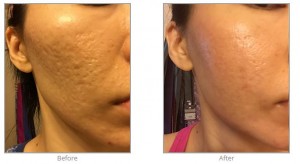
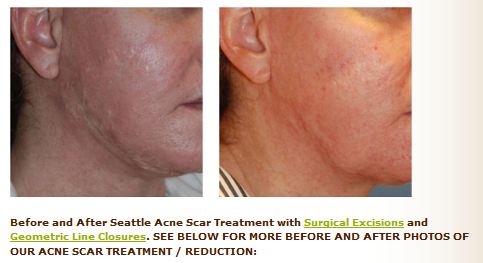
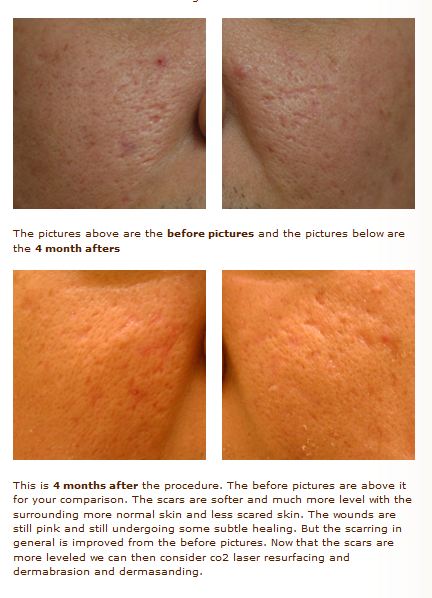
Facelift is not the first option but I have noticed improvement in Acne Scarring (Philip Young MD, Seattle / Bellevue Washington) from this procedure.  I personally have many patients that have noticed a significant improvement on their acne scarring  from a facelift procedure.  Is the facelift a procedure that is usually recommended to a person to improve their acne scars? The answer is “no”.  But I usually present all options to the patient.  Among these options include laser resurfacing, chemical peels, dermabrasion, dermasanding, fillers, fat injections, and excisional techniques.  It depends on how your scars look like.  If you have alot of deep ice pick scars you may need some excisions to completely remove them.  Of course if they are everywhere you might have to pick and choose which ones to excise or cut out.  This excisional approach is usually followed by some resurfacing.  I usually prefer to excise and then resurface the areas at the earliest 6-8 weeks.  One important point to remember is that the goal is improvement.  Your skin is probably not going to ever look like your skin when you were a baby of course. But we can make it better!  Fat injections and fillers can be used to break up the scarring that sometimes holding the skin down to the deeper layers.  This often causes the scars to be held down.  Fat injections is the best way to soften up the adhesions of scarring to allow the skin to come away from the deeper scarring. Here is a live demonstration of fat injections being done in the face (Dr Young is a fat injections specialist from Seattle, Washington). Fillers can also do this, but less well.  Here is a live demonstration video of an Acne Treatment Procedure.

I hope that helps.

Thanks for reading,

Dr Young

Dr Youngspecializes in Facial Cosmetic and Reconstructive Surgery and is located in Bellevue near Seattle, Washington

How do you get rid of the Angry Look?

Friday, February 5th, 2010

How do you get rid of the Angry Look?  But what if you are one that doesn’t want to come in for Botox several times in a year to keep the results. Botox is great, but a browlift or volumizing followed by laser resurfacing are options.  A browlift that pulls up our eyebrows and then with additional work to take out the muscles that are causing that frowning can be an option to improve this furrow.  I think volumizing this area can also be a good option.  Loss of volume in the forehead and in between the eyes can lead to more skin relative to the tissues underneath. This leads to more skin folding and a closer position of the skin to the muscles that are creating the wrinkles.  Volumizing takes up the extra skin and also separates the skin from the muscles more and decreases the muscles effect on the skin, ie wirnkles.  After both a volumizing procedure and a browlift either/or, you can resurface the face to decrease the wrinkles and also to subtly shrink the skin. The YoungVolumizer (Dr Young in Seattle) is a great option for this area.

Thanks for reading, Dr Young

Dr Young specializes in Facial Cosmetic and Reconstructive Surgery and is located in Bellevue near Seattle, Washington

How painful is dermabrasion? How would you rate the pain level? What are some anesthesia options for dermabrasion?

Monday, January 25th, 2010

Dermabrasion is a procedure where a wire brush is used to take down superficial and deeper layers of the skin to reduce scars, improve wrinkles, decrease pigmentary problems, etc.  It works under the same principle as Usually dermabrasion is not done without some type of anesthesia.  The types of anesthesia include local, regional, oral / iv sedation, general anesthesia.  Most physicians use a combination of above to do dermabrasion.  If it is a concentrated area like a scar, local anesthesia can be the only thing needed depending on the normal anxiety levels that a person usually gets in this type of situation.  If the person is likely to get anxious than oral or iv sedation can help.  For the whole face and larger areas, some type of whole body sedation through oral or iv sedation is helpful.  Regional anesthesia where the nerves are anesthetized can help the whole situation.

Thanks for reading, Dr Young

Dr Young specializes in Facial Cosmetic and Reconstructive Surgery and is located in Bellevue near Seattle, Washington

Laser Resurfacing with Active fx / Deep fx / Max fx to tighten the face for a non surgical face lift

Sunday, January 24th, 2010

As I mentioned in another blog, Active and Deep fx are techniques using technology to decrease the downtime from laser resurfacing while attempting to get better results. One thing that I mentioned in the last blog was that often times the more aggressive you are the more results you can get but also the more risk you take on.  Active Fx and Deep fx attempts to get  better results by having fractionated more superficial ablation and deeper fractionated ablation.  This technique treats the superficial elements like wrinkles, pigmentation and skin textures in a fractionated manner with the Active fx while trying to tighten the skin with the deep columns of ablation with the deep fx.  This can get subtle to moderate results.  If you want more significant results then max fx is an option to consider.  This is like active fx except the ablation is not longer fractionated and essentially is like more traditional resurfacing.  With max fx you are likely to get more tissue tightening.  Scientific research has shown that the amount of skin reduction that can be achieved with max fx is approximately 1cm squared in the cheeks and 0.5cm squared in the forehead and mouth area with less reduction around the eyes.  There is a limit to the amount of wrinkle reduction from laser resurfacing.  There is a point where the amount of water decreases the deeper you go.  This prevents the co2 laser from getting to deep.  This also prevents the co2 laser from creating scarring but also keeps the affects from working at the deeper wrinkles.  The options then include repeating the laser resurfacing in another year to further improve the results.  The other option which I like is the addition of dermasanding to the deeper wrinkles like around the eyes, between the eyes, around the mouth and parts of the cheeks.  I will talk more about dermasanding in another blog… Here is a live demonstration of my use of a co2 laser and laser resurfacing.

Thanks for reading, Dr Young

Dr Young specializes in Facial Cosmetic and Reconstructive Surgery and is located in Bellevue near Seattle, Washington

Difference between co2 laser resurfacing with Lumenis and their active fx / deep fx / total fx / max fx technical advances explained

Monday, December 7th, 2009

active_deep_totalfx

skin anatomy

skin anatomy

A knowledge of skin anatomy can help with understanding resurfacing (laser peel, laser skin rejuvenation) of all types including laser, chemical, dermabrasion.  Taking a look at the cross sectional area of the skin, you can see that the skin is broken up into basically two areas, the epidermis and dermis. All resurfacing progressively take away layers of skin and by doing so remove skin lesions, unwanted pigmentation, wrinkles etc.  What happens is that the deeper skin cells located in the depth of the hair follicle eventually resurface and repopulate the skin.  during this process a layer of scar tissue and collagen is formed under the new basement membrane.  This new layer of collagen is thought to be responsible for some of the benefits of resurfacing including tightening of the skin and maintaining the decrease state of wrinkles.  The basement membrane is the connective tissue floor that the stem cells rest on where they reside and repopulate the more superficial layer of skin cells.  Active Fx essentially takes away more superficial layers confined to just above or just below the basement membrane depending on how many passes are done, what power and what density is chosen.  The basic principle of active fx is the use of a fraction of the spot size.  When you look at the picture above you can see that active fx has some wide dots, wider that the deep fx.  But the key are the areas in between the dots that represent untreated skin.  This untreated skin allows a faster recovery and less down time.  The goal is to get some of the effects of resurfacing without the downtime.  To help with the results of active fx, deep fx was added to create more tissue tightening to a deeper level.  Notice in the picture that with deep fx the dots are thinner.  Deep fx is thinner but it reaches to a deeper level heating up deeper layers and leading to more tissue tightening to a thicker amount of skin.  When deep fx is combined with active fx you can get better results than when each are used alone and this is done with less downtime than traditional resurfacing.  Total fx is when active fx is combined with deep fx.  Traditional resurfacing can be explained by active fx and that approach.  The difference is that the dots are much closer together and depending on whether you increase the density of the dots the dots may overlap to a varying degree.  When the dots start to overlap at a density of 4-5 you start to get into more traditional type of resurfacing where all parts of the skin are taken away or ablated per spot.  This approach does not leave healthy skin in between the treated dots, so the downtime is like older approaches. This use of active fx with dots touching or overlapping is more appropriately called max fx, or traditional co2 resurfacing. One thing to remember is that the more aggressive you are the more results but also the more risks are involved.  Total fx tries to get more results than you would normally get with a certain amount of risk. Here is a live demonstration of my use of a co2 laser and laser resurfacing.

Thanks for reading, Dr Young

Dr Young specializes in Facial Cosmetic and Reconstructive Surgery and is located in Bellevue near Seattle, Washington